


Countertops: From Budget-Friendly Refreshes to High-End Finishes
Countertops are one of the first things people notice when they walk into a kitchen, bathroom, hotel room, break room, or commercial space. They can completely change the feel of a room without changing the entire layout and there are more options available today than ever before.
From laminate that can give an older kitchen a quick refresh to natural quartzite and marble that can become the centerpiece of a high-end home, there isn't one countertop material that works for every project.
As a general contractor working across residential, commercial, hospitality, multi-family, and public works projects, we look at countertops from more than just a design perspective. We consider how the space will be used, how much maintenance the owner is willing to take on, how long the material is expected to last, how easily it can be repaired, and, of course, how it fits into the overall project budget.
Laminate: The Budget-Friendly Refresh
Laminate is probably one of the most misunderstood countertop options.

It isn't necessarily the first material someone thinks of when they hear "high-end remodel," but today's laminate products are a long way from the countertops many of us remember growing up with. There are now patterns that replicate marble, quartz, concrete, wood, and other materials surprisingly well. Installed laminate generally falls somewhere around $15–$40 per square foot, although pricing can vary significantly based on the product, fabrication, edge details, cutouts, and installation.
For us, laminate makes a lot of sense when the goal is to refresh a space without putting a large portion of the renovation budget into the countertop. This can be particularly useful in multi-family properties. If you're updating 20, 50, or 100 kitchens, choosing a durable, attractive laminate can free up money for other improvements while still giving each unit a fresh appearance.
Pros: Affordable, large variety of colors and patterns, relatively quick installation, easy to maintain.
Cons: Less resistant to heat and moisture than stone, seams can be noticeable, and damaged areas can be difficult to repair invisibly.
Best suited for: Multi-family renovations, rental properties, budget-conscious residential remodels, secondary kitchens, laundry rooms, and spaces where the countertop doesn't need to be the star of the room.
Solid Surface: The Middle Ground
Solid surface countertops, including acrylic products such as Corian, sit somewhere between laminate and natural stone in both appearance and price.

They typically run approximately $40–$100 per square foot installed, depending on the product and project.
One of the biggest advantages of solid surface is the ability to create a very seamless appearance. Seams can be much less noticeable than they are with some other materials, and the material can often be sanded or repaired if it becomes scratched or damaged. That repairability can be especially attractive in commercial and hospitality environments where a surface is going to see a lot of use.
The downside is heat. Solid surface isn't the material we'd recommend if someone is regularly putting extremely hot cookware directly onto the countertop.
Pros: Seamless appearance, repairable, low maintenance, wide range of colors, good for custom applications.
Cons: Not as heat resistant as natural stone, can scratch, and generally doesn't have the same high-end appearance as premium stone.
Best suited for: Commercial spaces, hospitality, bathrooms, offices, multi-family projects, and residential projects looking for something more substantial than laminate.
Butcher Block: Warm, Classic, and Different
Butcher block is one of the easiest ways to add warmth to a kitchen.

It works particularly well when it's used intentionally. Instead of putting butcher block throughout an entire kitchen, we often like the idea of using it on an island or as an accent area while using another material elsewhere. Installed costs can range roughly from $35–$90+ per square foot, depending on the wood, construction, finish, and installation.
The tradeoff is maintenance.
Wood needs to be cared for differently than stone. Water around sinks, heat, scratches, and general wear can all affect the surface. Depending on the finish, it may need periodic oiling, conditioning, or refinishing.
But that is also part of the appeal. Unlike many other countertop materials, butcher block can be sanded and refinished, giving it a very different lifespan than a material that has to be replaced when it becomes significantly damaged.
Pros: Warm appearance, natural material, repairable and refinish-able, great accent material.
Cons: Requires more maintenance, susceptible to water damage, scratches and stains can develop.
Best suited for: Residential kitchens, islands, farmhouse or transitional designs, accent areas, and projects where character is more important than having a completely maintenance-free surface.
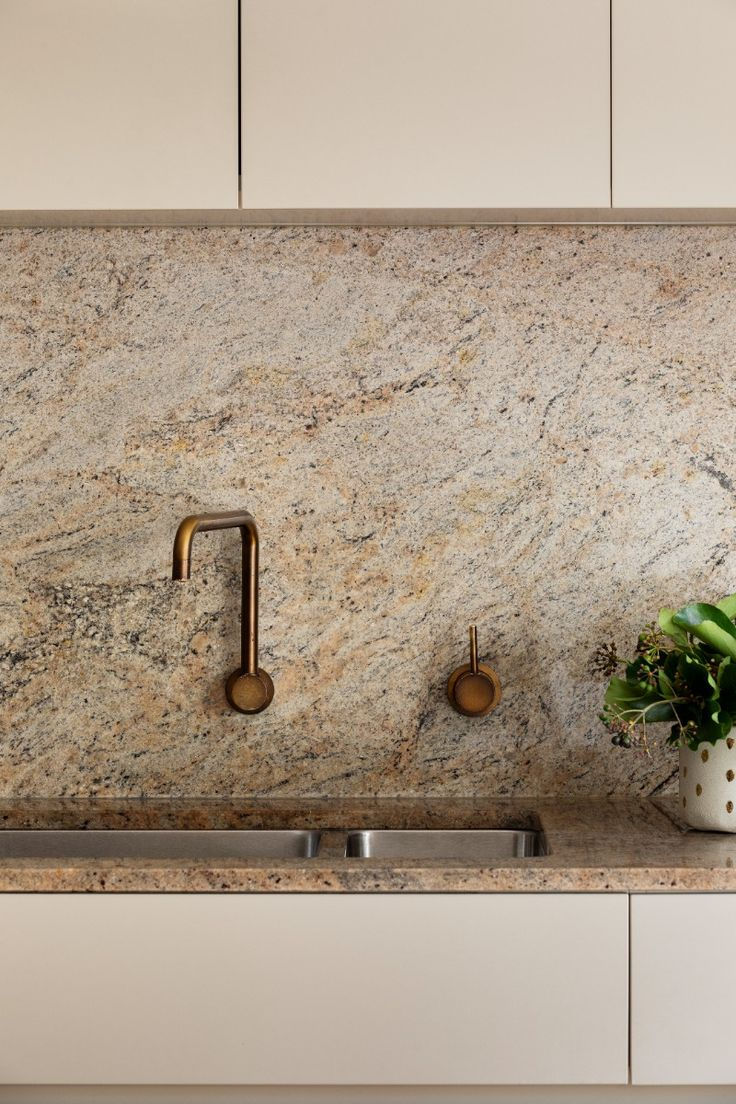
Granite: Natural Stone That Still Holds Its Own
Granite has been a staple in kitchens for decades, and there is a reason it has stayed around.

It is extremely durable, handles heat well, and comes in a huge range of colors and patterns. Depending on the stone, fabrication, and installation, granite can range from approximately $40–$175+ per square foot installed.
One thing to remember with granite is that you're buying a natural material. Every slab is different. That can be a major advantage if you want something unique, but it can also make matching more difficult.
Granite generally requires periodic sealing to help protect against staining. The exact maintenance schedule depends on the stone and the sealer used.
From a contractor's perspective, granite can be a great option when someone wants a natural stone without necessarily stepping into the pricing or maintenance expectations of some premium stones.
Pros: Extremely durable, excellent heat resistance, natural variation, wide range of price points.
Cons: Requires periodic sealing, natural variation can make matching difficult, heavier than some alternatives.
Best suited for: Residential kitchens, higher-end remodels, commercial applications, and projects where natural stone and durability are priorities.
Quartz: The Workhorse
If there is one countertop material that has become a go-to for many projects, it is quartz.

Engineered quartz gives you the look of stone while providing a highly consistent product. It is non-porous, doesn't require routine sealing, and is resistant to stains and everyday wear. Current installed pricing commonly falls around $50–$150 per square foot, depending heavily on the product and level of finish.
Quartz is especially useful when the client wants the appearance of marble or natural stone but doesn't want the same level of maintenance.
It isn't perfect, though. Quartz is not as heat tolerant as granite or quartzite, so hot pans should not be placed directly on the surface. It is also worth remembering that not all quartz is created equal. There are many manufacturers and price levels, so the appearance, quality, warranty, and price can vary considerably.
Pros: Low maintenance, stain resistant, consistent appearance, huge selection of colors and patterns.
Cons: Not ideal for direct high heat, premium designs can become expensive, damaged sections aren't always easy to repair.
Best suited for: Residential kitchens, higher-end multi-family, hospitality, offices, commercial spaces, and homeowners who want a high-end appearance without high maintenance.
Quartzite: Natural Stone With a Premium Feel
Quartzite is where we start getting into the higher-end countertop conversation.

It is a natural stone, but despite the similar name, quartzite and engineered quartz are not the same material.
Quartzite can provide the dramatic veining and natural variation people love about marble while offering excellent durability and heat resistance. Installed pricing can commonly fall around $70–$200+ per square foot, depending on the stone and fabrication.
For the right project, quartzite can be absolutely beautiful.
The downside is that you're paying for a premium natural material, and it still requires the care associated with natural stone, including sealing.
Pros: High-end appearance, excellent durability, strong heat resistance, unique natural patterns.
Cons: Expensive, requires sealing, fabrication can be more involved, slab selection matters.
Best suited for: High-end residential homes, luxury hospitality, custom kitchens, statement islands, and projects where the countertop is intended to be a major design feature.
Marble: Beautiful, But Know What You're Signing Up For
Marble is one of those materials where the reason to choose it is often emotional as much as practical.
There is a reason marble has been used in beautiful buildings for centuries. The veining, movement, and natural variation simply aren't easy to replicate. It is also one of the materials where we would encourage clients to understand the maintenance before falling in love with the slab.

Installed marble can range from approximately $65 to $250+ per square foot, with premium stones going significantly higher.
Marble is softer and more susceptible to scratching, staining, and etching than many other countertop materials. Acidic foods and liquids can affect the surface, and sealing helps but does not make marble maintenance-free. That doesn't mean marble is a bad choice.
It means marble is a lifestyle choice.
If you want a countertop that will remain perfectly pristine for decades, there may be better options. If you appreciate natural patina and don't mind that the countertop will develop some character over time, marble can be one of the most beautiful choices available.
Pros: Unmatched natural beauty, timeless, unique, excellent for high-end design.
Cons: Higher maintenance, susceptible to etching and scratching, expensive.
Best suited for: Luxury residential, boutique hospitality, statement kitchens, bathrooms, and projects where aesthetics take priority over maintenance.
Porcelain and Sintered Stone: A Newer Option Worth Watching
Porcelain slabs and sintered stone have become increasingly popular because they bring some impressive performance characteristics to the countertop market. They can be extremely durable, resistant to staining, and suitable for a variety of interior and exterior applications. Some products also offer strong UV resistance, making them interesting for outdoor applications. Installed pricing often lands somewhere around $55–$140+ per square foot, depending on the product and fabrication.
The biggest consideration is fabrication. These materials can be unforgiving during cutting and installation, particularly around sink cutouts and edges. That means choosing an experienced fabricator is just as important as choosing the material.
Pros: Durable, low maintenance, stain resistant, many design options, some products suitable for exterior use.
Cons: Can chip at edges, specialized fabrication, installation can be more complex.
Best suited for: High-end residential, commercial, hospitality, outdoor kitchens, modern designs, and projects where durability is important.
The Countertop Doesn't Have to Be the Same Everywhere
One of our favorite approaches on larger projects is not treating every countertop the same. A home might have quartz throughout the kitchen with a butcher block island. A hotel might use a durable, cost-conscious material in guest rooms while reserving a higher-end stone for the lobby bar. A multi-family development might use one durable countertop throughout the standard units and upgrade the countertops in premium units. A commercial building might use solid surface in common areas and quartz in executive spaces.
There is no rule saying every countertop in a building has to be the same.
In fact, using different materials strategically can often create a much more interesting finished project while allowing the budget to be allocated where it will have the most impact.
The Contractor's Perspective: It's About the Application
When we're selecting materials for a project, the question isn't simply: "Which countertop is the best?"
The better question is: "Which countertop is the best for this particular space?"
A rental unit doesn't necessarily need the same countertop as a luxury custom home. A hotel lobby doesn't have the same requirements as a residential kitchen. A restaurant prep area has different concerns than a bathroom vanity and a public works project may have completely different requirements for durability, maintenance, specifications, and long-term ownership.
The best countertop is the one that balances appearance, durability, maintenance, budget, availability, and how the space will actually be used.
Don't Forget the Details
The countertop material is only part of the finished product. The edge profile, thickness, backsplash, sink style, seams, overhangs, cutouts, and even the way the slab is laid out can dramatically change the final appearance.
A relatively simple quartz can look incredibly high-end with the right edge detail and backsplash. Likewise, an expensive slab can lose some of its impact if the layout, seams, or surrounding finishes aren't well thought out.
From the construction side, pricing isn't simply the cost per square foot of the material. Fabrication, demolition, sink and cooktop cutouts, edge profiles, delivery, installation, plumbing, cabinet modifications, and the complexity of the project can all affect the final number.
So, Which One Would We Choose?
The honest answer is: it depends.
For a budget-conscious multi-family refresh, laminate can be a smart choice. For a durable, low-maintenance residential kitchen, quartz is hard to beat. For natural stone and heat resistance, granite or quartzite may make more sense. For warmth and character, butcher block is worth considering. For a seamless commercial application, solid surface can be a great option. For a luxury project where the material itself is part of the design, marble, quartzite, or a premium porcelain slab may be exactly what the project needs.
There isn't one countertop that wins every category, and that's actually a good thing.
With so many materials, price points, colors, textures, and performance characteristics available today, countertops can be selected specifically for the building, the budget, and the people who will use the space.
Whether we're refreshing a residential kitchen, renovating a multi-family property, building out a hotel, updating a commercial space, or working on a larger public project, the goal is the same: choose a material that looks right, performs well, and makes sense for the project long after construction is finished.
— The team at Creative Contracting


Comments